
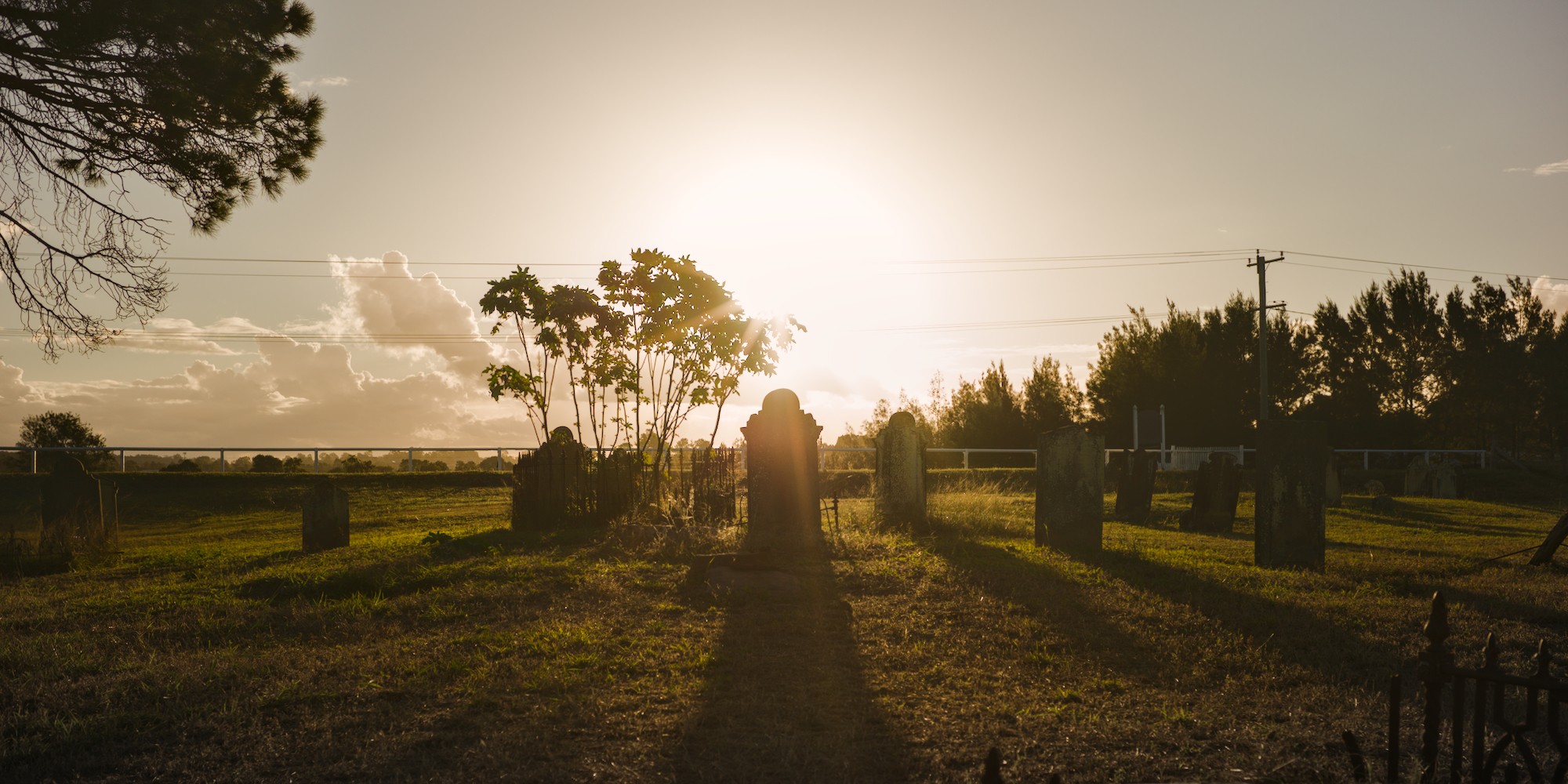
Remains II
Oakhampton, on the bank of the Hunter River.
Ninety seven recorded burials, between 1849 and 1894, all in the Wesleyan denomination.
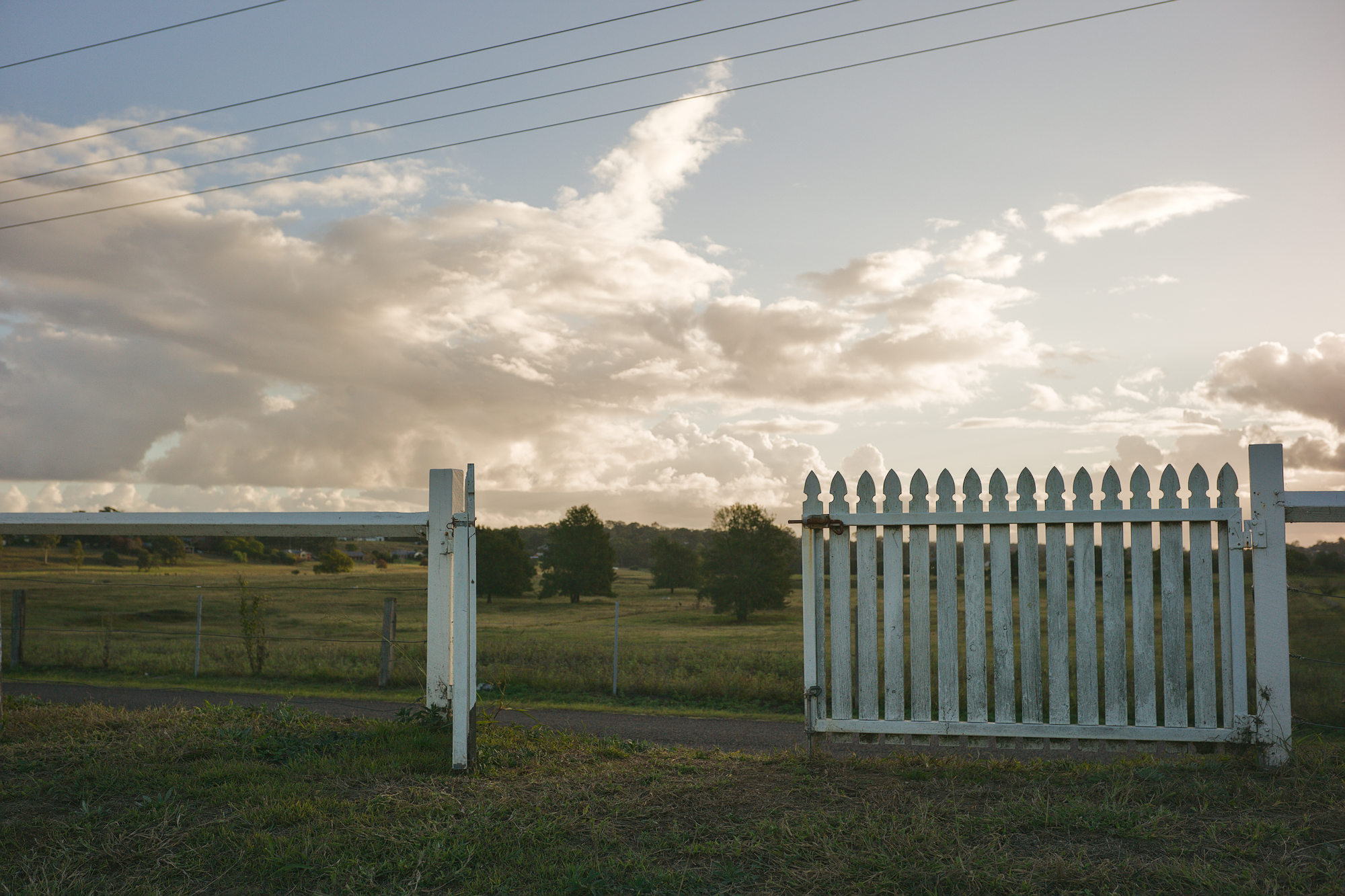
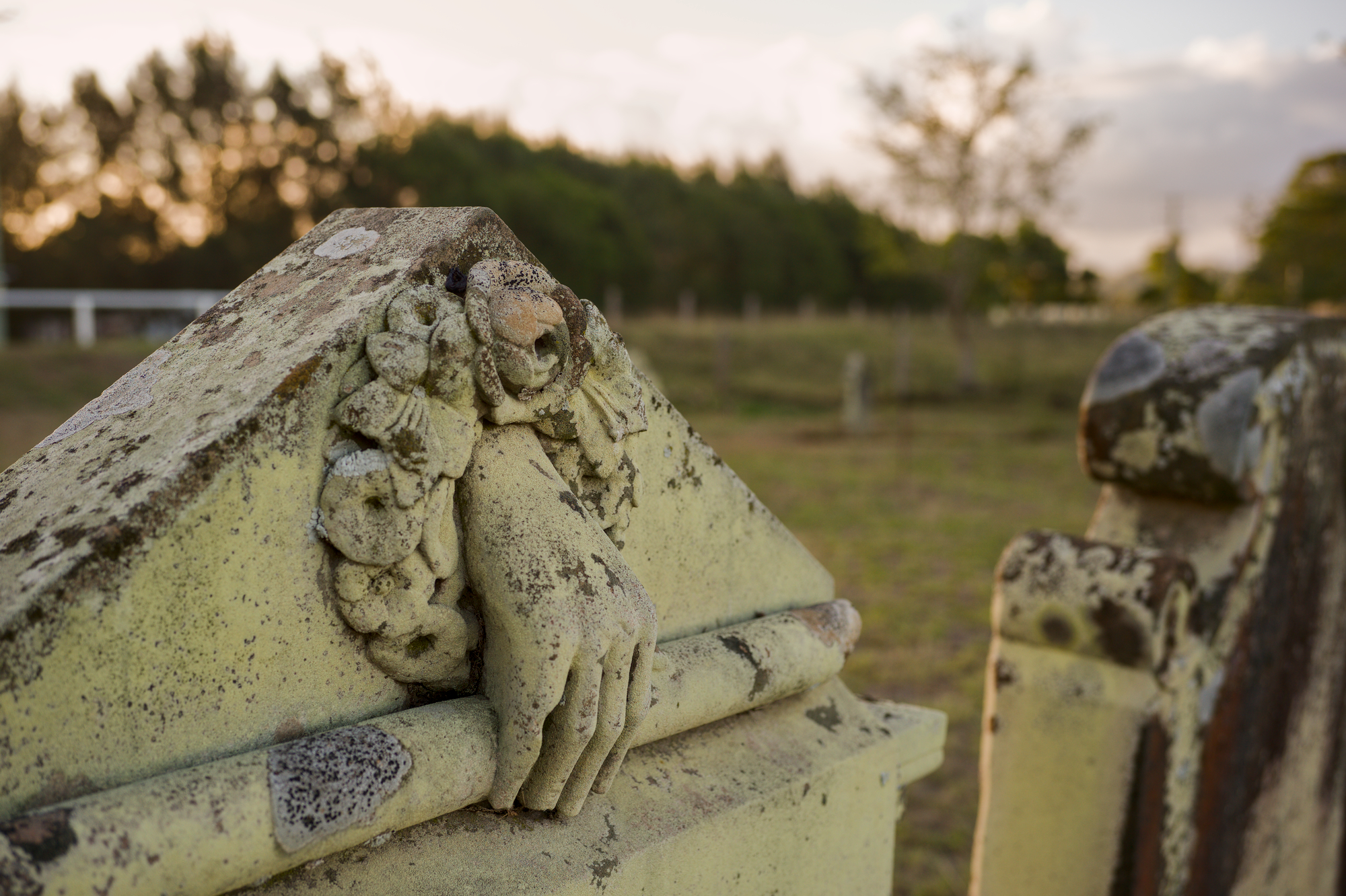
The landscape of the cemetery has changed significantly since it was first settled when if would have appeared as a forested rise with steep terraces running down to the river. The land was original densely forested, but within the first twenty years of settlement most of the large rosewood and cedar trees had been removed. By the 1840s, allotments in the area were described as either lightly timbered or extensively cleared leaving only “a small piece of cedar brush” along the river.
The abrupt land clearance had two dramatic effects, flooding and increased soil erosion, both which affected the landscape of the cemetery as it is seen today.
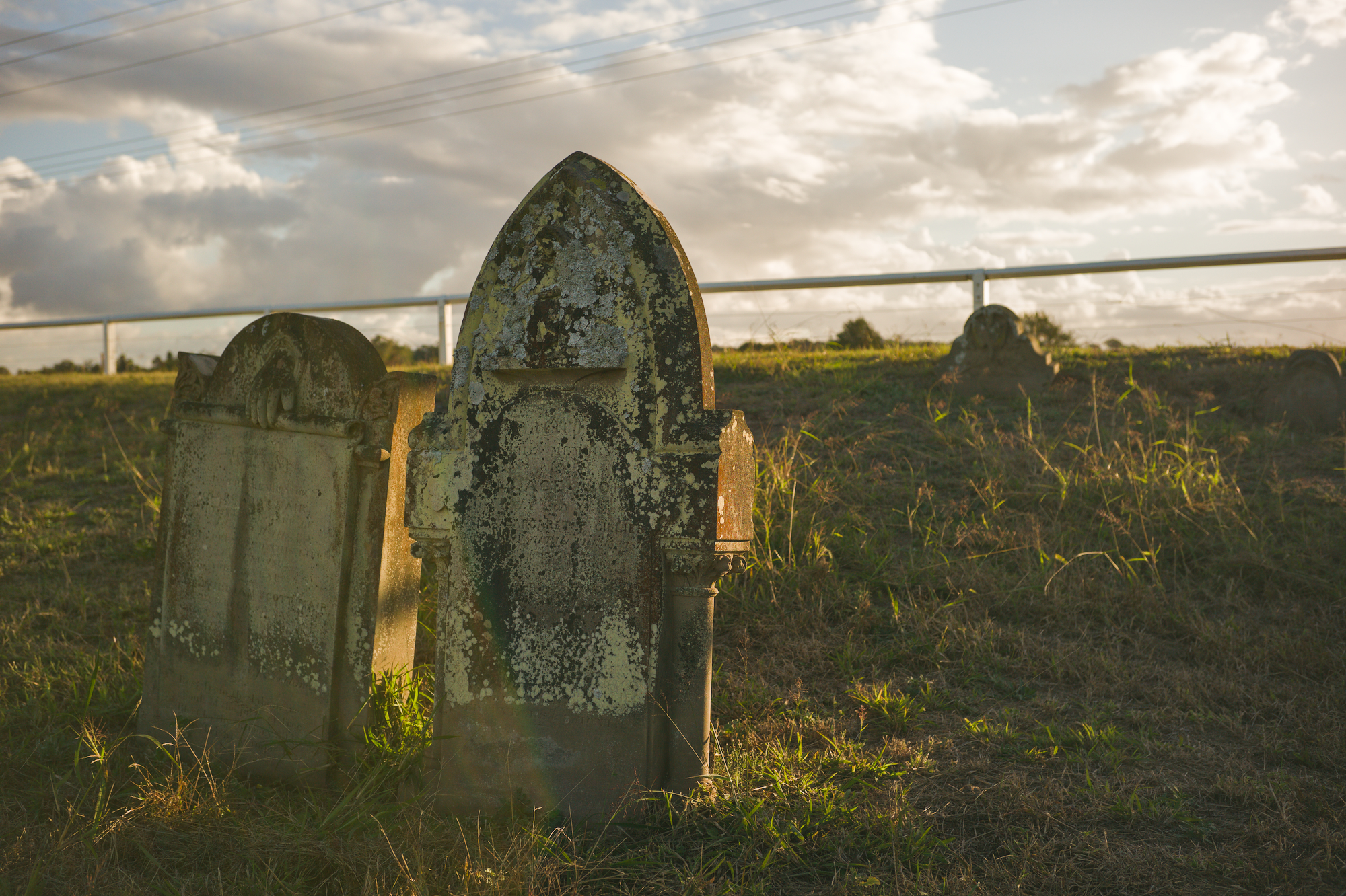
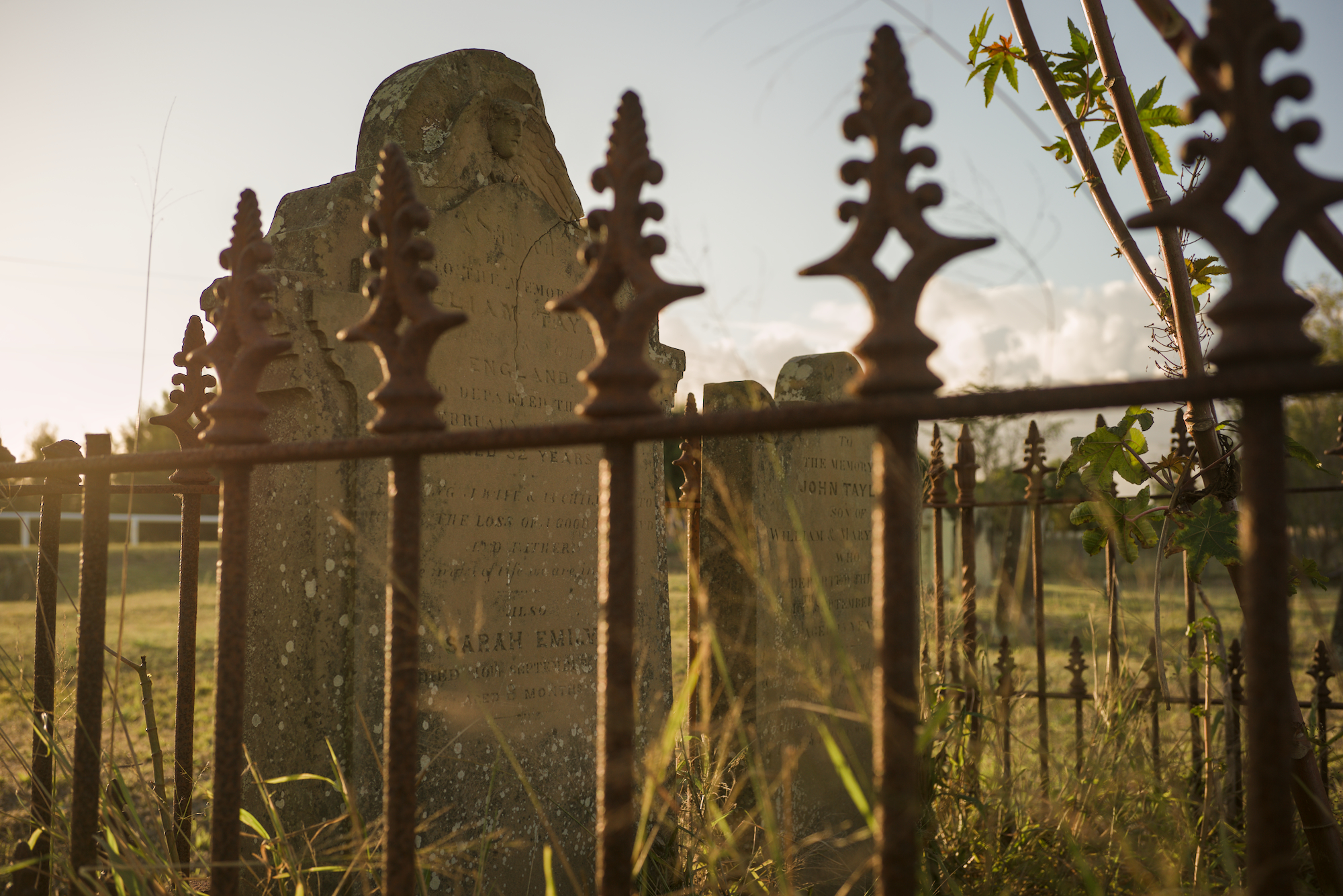
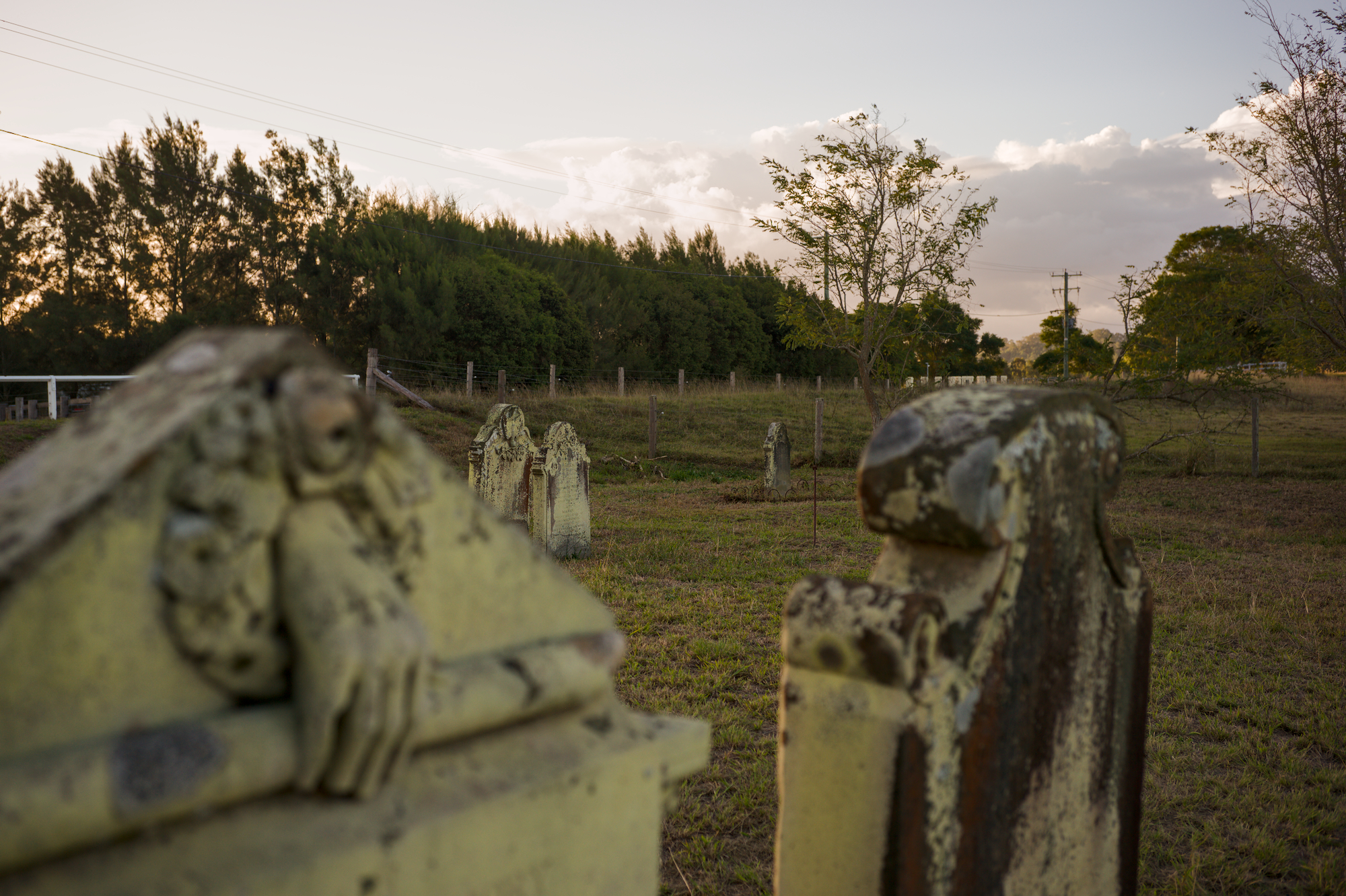
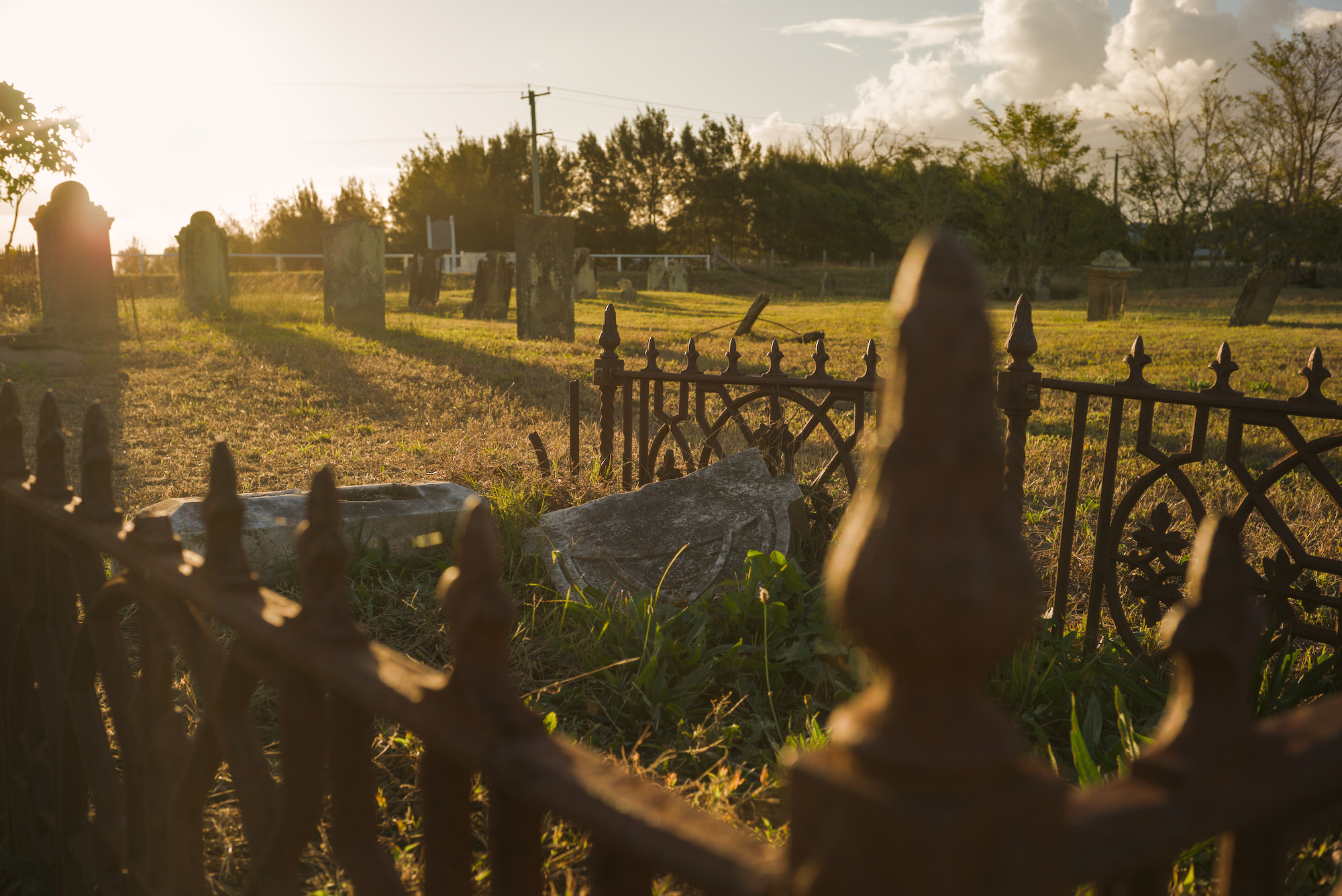
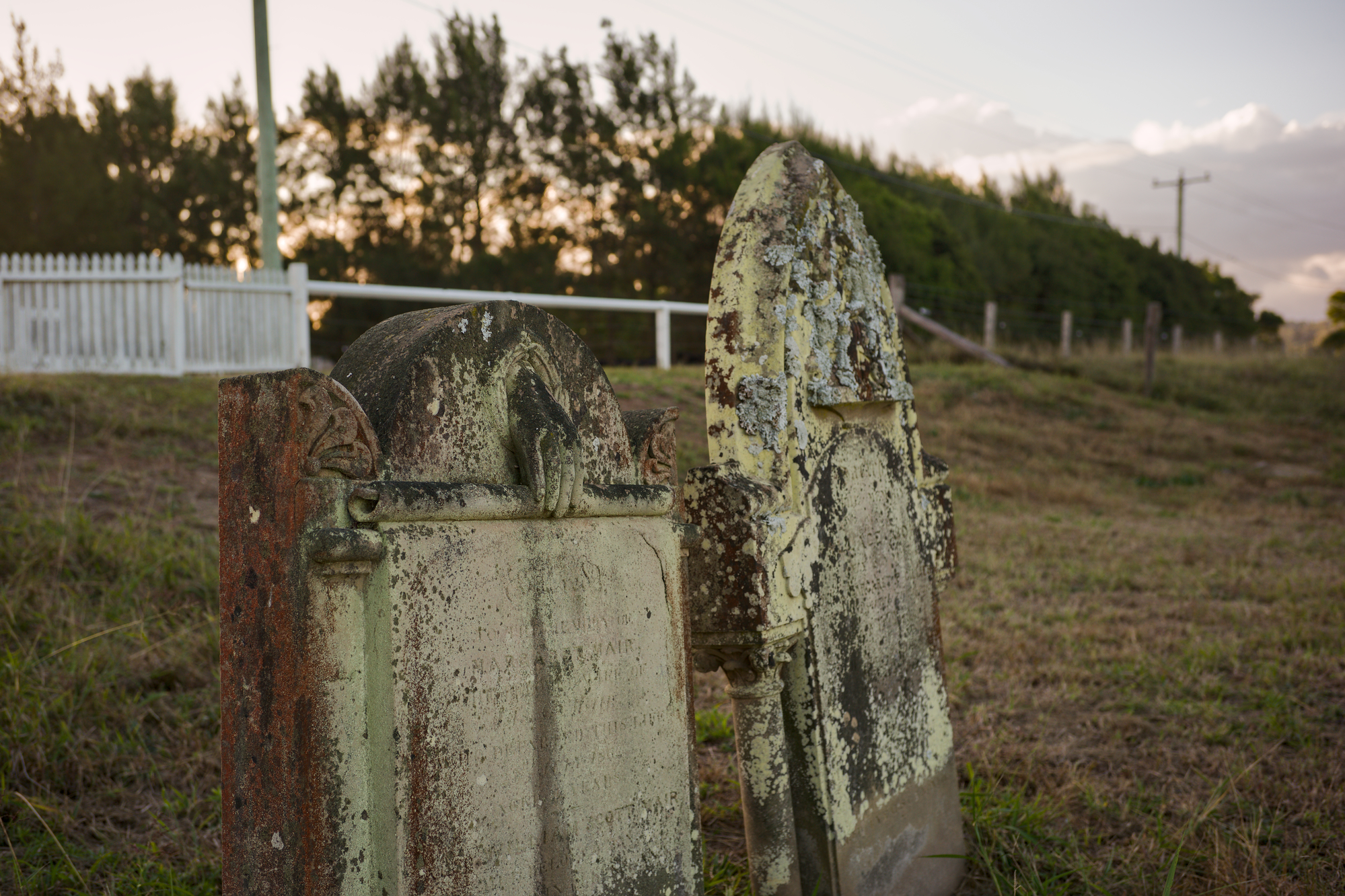
Because the cemetery stands on a low ridge top seamed with shallow gullies, the headstones are all manner of different heights. There is over a metre difference between some where they overlap the old terraces. Soil eroded from elsewhere has filled the small gullies partly burying some headstones. This pattern of soil redeposition rising from agricultural practices was documented from as early as 1876.
Extracts from this series appeared in the article
as an exploration of evidence, documentation and the fantasy of permanence.